
Supermoon: What is it
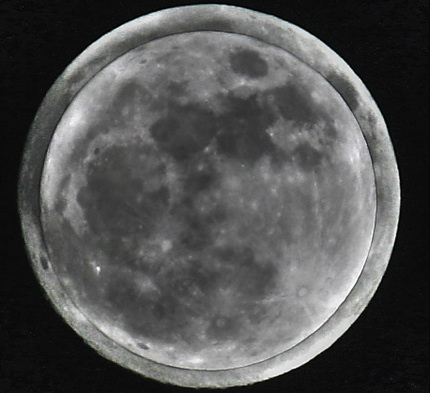
A supermoon occurs when the moon reaches its full phase at the same time it’s at perigee, the point in its orbit when it’s closest to Earth. Because the Moon is closer to Earth than on average, its apparent size and brightness are greater than they normally would be at full moon. For instance: when at perigee and full, the Moon can appear ~14 % wider in diameter and ~30 % brighter than when at apogee.
The term itself was coined in the late 1970s by an astrologer named Richard Nolle. While the word holds no significant meaning in science, it is of general interest to stargazers thanks to the Moon’s slightly larger appearance and, as a full moon, increased luminosity.
Why Does It Happen?
- The Moon orbits Earth in an ellipse rather than a perfect circle. This further means its distance varies.
- A supermoon occurs when the full moon closely coincides with perigee.
- The word “supermoon” is popular, but not a strict scientific term. Some astronomers prefer “perigee full moon” or “perigee-syzygy”.
When & How Often Does It Occur?
- Depending on how one defines the term, there are typically about 3–4 supermoons annually.
- Due to orbital mechanics, some full moons will be closer to perigee than others.
- EarthSky For instance, upcoming supermoons have been listed with dates by astronomical sources such as astronomy.com in the context of 2025.
Effects & Myths
- Tides: Because the Moon is closer, the gravitational pull is slightly stronger when it’s at perigee, which can lead to somewhat higher “spring tides”. But these differences are usually small.
- Natural Disasters: There is no scientifically valid evidence to believe that supermoons cause earthquakes, volcanic eruptions, or other major geological events.
- Photography & Experience: The horizon setting often enhances the visual impression due to perspective and surrounding landmarks, hence supermoons are very photogenic.
Suggested Read: Amavashya Days | New Moon Days
