
Snakes and Ladders originated in India
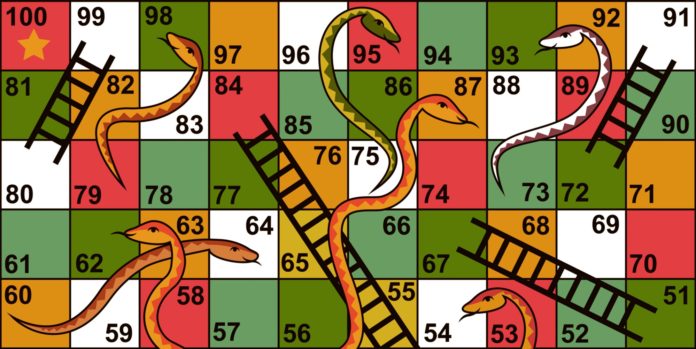
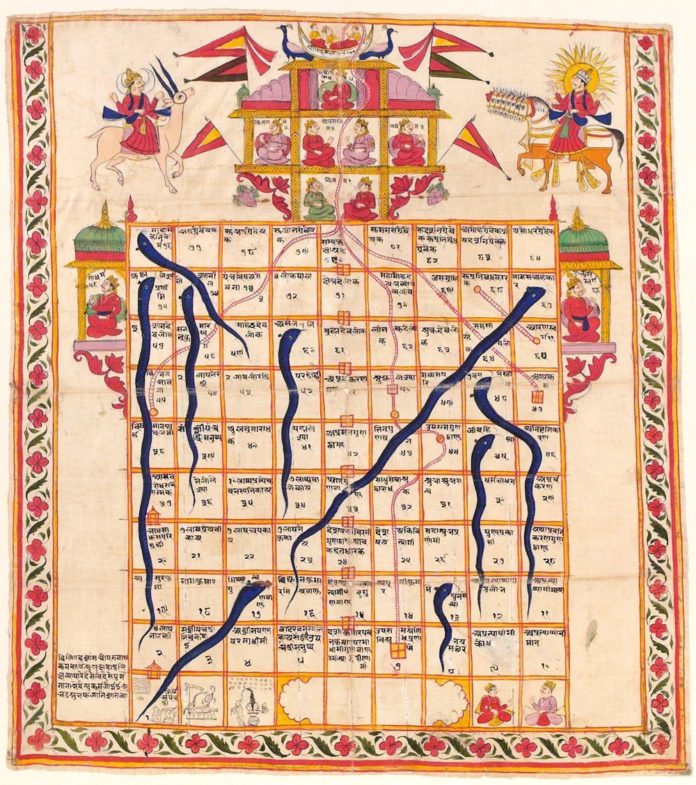
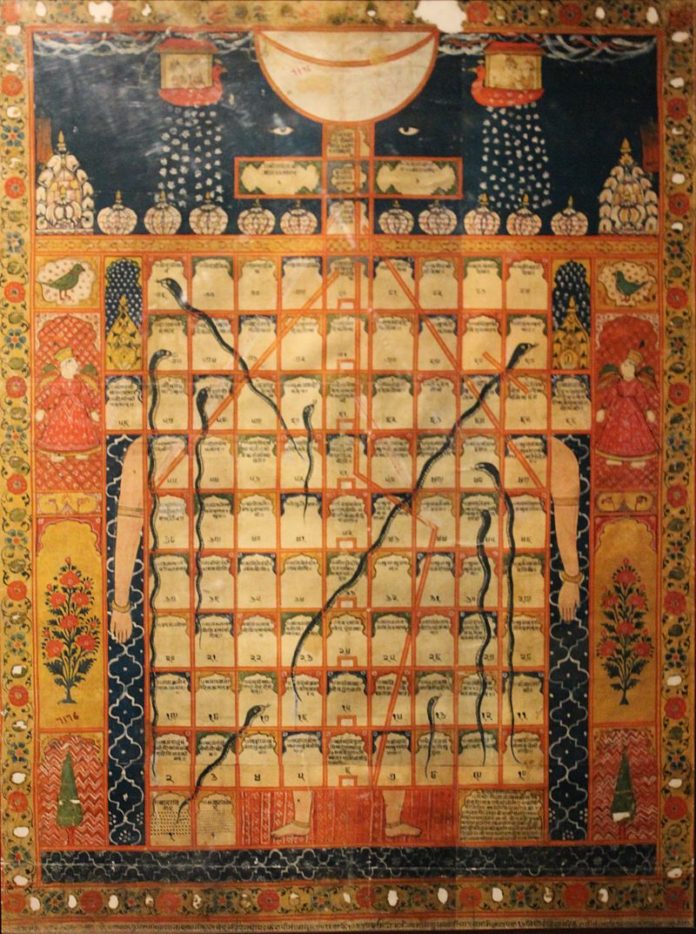
The board game, today called Snakes and Ladders, originated in ancient India, where it was known by the name Mokshapat or Moksha Patamu. It’s not exactly known when or who invented it, though it’s believed the game was played at a time as early as 2nd century BC. According to some historians, the game was invented by Saint Gyandev in the 13th century AD. Originally, the game was used as a part of moral instruction for children. The squares in which ladders start were each supposed to stand for virtue, and those housing the head of a snake were supposed to stand for an evil.
The snakes outnumbered the ladders in the original Hindu game. The game was transported to England by the colonial rulers in the latter part of the 19th century, with some modifications. The modified game was named Snakes and Ladders and stripped of its moral and religious aspects and the number of ladders and snakes was equalized. In 1943, the game was introduced in the US under the name Chutes and Ladders.
Suggested Read: Traditional Indoor Games in India
While every effort is made to ensure the accuracy of the information presented, some images used in older articles may have originated from third-party sources whose ownership could not be identified. We respect the intellectual property rights of others and do not intend to infringe any copyright.
If you are the copyright owner of any image or content displayed on this website and believe it has been used without appropriate permission or attribution, please contact us with the relevant details. Upon verification, we will promptly provide proper credit, replace the material, or remove it as requested.
