
World Vegetarian Day
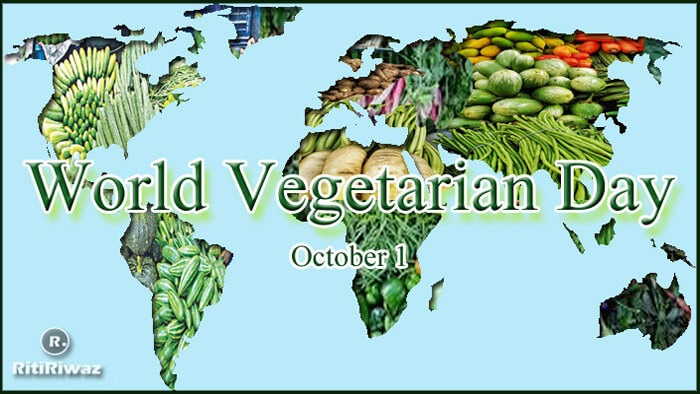
World Vegetarian Day is celebrated every year on 1 October since 1977 and Vegetarian Awareness Month that runs throughout October. The main purpose of this day is to tell people the benefits of being vegetarian and to motivate more and more people to be vegetarian. Taking meat, dairy, and eggs off our plates is one of the best things we can do for the Earth. It brings awareness to the ethical, environmental, health, and humanitarian benefits of a vegetarian lifestyle.
History
World Vegetarian Day was founded in 1977 by the North American Vegetarian Society (NAVS) and was endorsed by the International Vegetarian Union in 1978. It is a non-profit organization that provides support to vegetarians at all stages of their journey, and also educates the public on the benefits of a “total vegetarian” diet, aka veganism. Make a difference this October by informing others about the benefits of vegetarianism. You will be helping to create a better world because vegetarian diets have proven health benefits, save animals’ lives, and help to preserve the Earth.
Vegetarian Awareness Month has a connection to Mahatma Gandhi. It’s sometimes called Reverence for Life Month and is related to Gandhi’s birthday (October 2nd) and to his principle of nonviolence.
People choose to become vegetarians for many different reasons. Common motivations are ethical concerns, health concerns, and environmental concerns. Not eating meat saves animals from poor factory-farm conditions; reduces the risk of heart disease, stroke, and cancer; and mitigates the environmental pollution of animal agriculture.
Vegetarian Diets
-
Reduce the risk of major killers such as heart disease, stroke, and cancer while cutting exposure to foodborne pathogens.
-
Provide a viable answer to feeding the world’s hungry through more efficient use of grains and other crops.
-
Save animals from suffering in factory-farm conditions and from the pain and terror of slaughter.
-
Conserve vital but limited freshwater, fertile topsoil, and other precious resources.
-
Preserve irreplaceable ecosystems such as rainforests and other wildlife habitats.
-
Decrease greenhouse gases that are accelerating global warming.
-
Mitigate the ever-expanding environmental pollution of animal agriculture.
