
The Ten Gurus of Sikhism
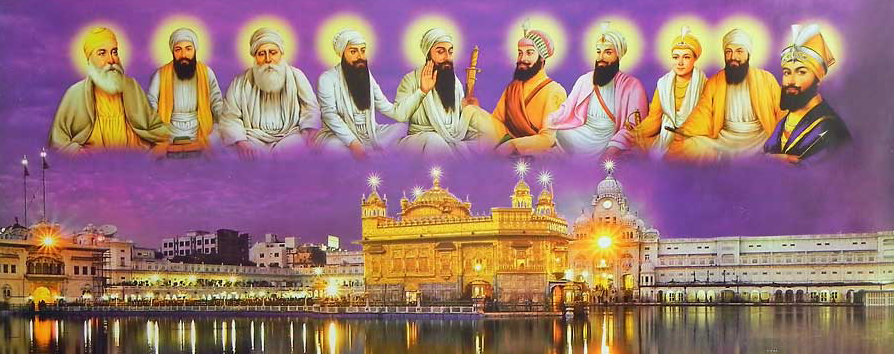
The” Gurus” in Sikhism are regarded as divine messengers who have brought forth eternal wisdom. There are a total of eleven Gurus. Ten human-form gurus and the eleventh or the current is the Sikh scripture known as the Guru Granth Sahib.
The Ten Gurus of Sikhism with their divine attribute
1. Guru Nanak (1469 to 1539) – HumilityThe Sikh tradition began with his teachings. He was the founder of Sikhism based on Equality and justice for all.
2. Guru Angad (1504 to 1552) – ObedienceHe compiled Nanak’s hymns, which were the start of the Sikh scripture.
3. Guru Amar Das (1479 to 1574) – EqualityHe divided the expanding Sikh community into distinct congregations.
4. Guru Ram Das (1534 to 1581) – ServiceHe founded the city of Amritsar, which is considered the sacred center of the Sikh faith.
5. Guru Arjan Dev (1563 to 1606) – Self-SacrificeHe compiled the Adi Granth and built the Golden Temple in Amritsar. He altered the role of the Guru by being a worldly, as well as spiritual, leader.
6. Guru Hargobind (1595 to 1644) – JusticeUnder him, the military strength of the Sikh community developed and grew.
7. Guru Har Rai (1630 to 1661) – MercyHe was only fourteen years old when he became Guru. Throughout his reign, Sikhs were preoccupied with the military threat of the Moghul Empire.
8. Guru Har Krishan (1656 to 1664) – PurityHe was just five years old when he became Guru, and he died three years later in a smallpox epidemic.
9. Guru Tegh Bahadur (1621 to 1675) – TranquilityHe was martyred for refusing to convert to Islam.
10. Guru Gobind Singh (1666 to 1708) – Royal CourageThe last of the Sikh Gurus, Gobind Singh established the Khalsa and named the Adi Granth his successor. He declared that Guru Granth Sahib as the eternal Guru and ultimate spiritual authority for the Sikhs.
