
The Organza Saree Guide: Craftsmanship, Styling & Why It’s the Most Luxurious Designer Saree
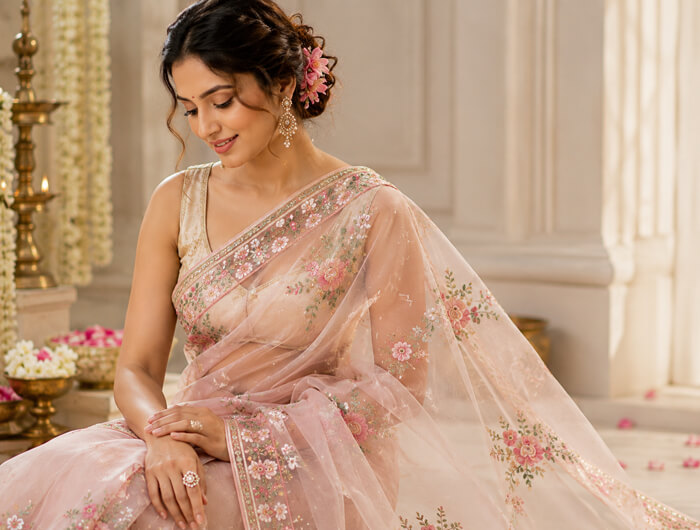
Few fabrics carry the quiet authority of organza. Translucent yet structured, weightless yet commanding – the organza saree holds a rare position in the modern Indian wardrobe. It is delicate without being fragile, and refined without needing heavy embellishment to make an impression.
In recent seasons, the organza saree has moved firmly to the centre of luxury ethnic fashion. Once considered secondary to silk or chiffon, it is now one of the most desired expressions of a luxurious designer saree – appearing at weddings, receptions, and red carpets with equal confidence.
Understanding what makes organza exceptional is the foundation of making a purchase you will value for years.
What Makes an Organza Saree Truly Luxurious?
Weave and Composition: Organza is woven using tightly twisted filament yarns in a plain weave. Pure silk organza sits at the top of the quality hierarchy – it has a refined sheen, nuanced texture, and structural body that drapes in sculpted folds rather than clinging or collapsing.
Fabric Quality: A genuine silk organza saree feels light but firm. It holds pleats precisely and creates an architectural silhouette when draped. Synthetic organza feels plasticky by comparison, lacks natural luminosity, and loses crispness quickly.
Handcrafted Detailing: Because of its taut, sheer surface, organza is an exceptional canvas for embellishment. Hand-embroidered florals, cutwork, zardozi borders, and three-dimensional appliqué all achieve spectacular results – the transparent background makes embellishment appear to hover against the skin, an effect unique to this fabric.
Design Language: The finest organza sarees are built on intentionality and restraint. Premium collections use bare organza strategically, concentrating craft detail at the pallu or border to create purposeful visual contrast.
Why an Organza Saree Is a Fashion Investment
Longevity: Silk organza resists stretching and deformation. A well-maintained piece retains its shape and sheen for decades, outlasting softer alternatives like chiffon or crepe.
Versatility: A plain ivory organza works at a daytime wedding. Add heavy embroidery, and the same fabric suits a bridal reception. Few fabrics adapt across such a wide occasion range.
Timeless Elegance: Organza sarees are not trend-dependent. A well-chosen piece purchased today remains relevant years from now – the very definition of a considered wardrobe investment.
Cultural Significance: Purchasing a handcrafted organza saree is also an act of engaging with living artisanal heritage, supporting skills and textile communities that represent an irreplaceable cultural lineage.
Organza Saree Trends in 2026
Tonal Embroidery: Ivory on ivory, blush on blush. Tone-on-tone embroidery defines the minimal luxury mood that has replaced maximalism in premium ethnic fashion this year.
3D Floral Appliqué: Hand-applied fabric flowers on sheer organza continue to dominate bridal and reception collections, creating the signature floating-embellishment effect that organza does best.
Ombre Dyeing: Gradient dyeing from deep jewel tones at the pallu to soft pastels at the border creates a watercolour aesthetic that suits the fabric’s translucency beautifully.
Handpainted Sarees: Botanical illustrations and heritage motifs applied directly to organza represent the most exclusive and collectible format in the luxury category right now.
Contemporary Drapes: Cape-drapes, belt-cinched silhouettes, and layered skirt styles give organza sarees a modern fashion identity beyond the traditional Nivi drape.
Many contemporary designer labels, including Studio 113, have made organza a central fabric in their luxury saree lines, recognising its rare ability to bridge heritage tradition with modern design sensibility.
How to Choose the Perfect Organza Saree
Body Type: Organza creates volume without weight, making it especially flattering for petite frames. Fuller figures should favour vertical embellishment patterns and avoid heavy border work at the hem.
Occasion: For bridal wear, choose richly embellished silk organza in jewel tones or ivory. For festive occasions, opt for lighter embellishment in pastel palettes. For formal events, plain or minimally detailed organza in muted tones works best.
Colour: White, ivory, blush, and sage appear particularly luminous on organza. Deep tones like navy, emerald, and midnight plum carry a regal richness against the sheer surface.
Blouse Styling: Organza demands a structured blouse that matches its visual confidence. Corset cuts, architectural high necks, and deep-back designs in raw silk or brocade are all strong pairings.
Styling Tips for Weddings and Festive Events
Jewellery: Polki sets, layered pearl necklaces, and chandelier earrings complement organza’s lightness. For minimal sarees, bold sculptural gold creates a striking contrast.
Blouse: Deep V-backs, off-shoulder designs, and corset silhouettes in velvet or raw silk create a modern bridal aesthetic. For daytime events, a fitted full-sleeve blouse adds definition without overpowering the fabric.
Footwear: Pointed-toe kitten heels or embroidered flats suit the fabric’s refinement perfectly. Avoid heavy platforms, which visually weigh down the saree’s delicacy.
Draping: A front-pallu drape or belt-cinched silhouette with a loose flowing pallu offers a fashion-forward alternative to the traditional drape, particularly suited to cocktail events and destination weddings.
Common Mistakes to Avoid
Confusing Silk and Synthetic: Always ask explicitly about fabric composition. Silk and polyester organza look similar in photographs but differ dramatically in hand, drape, and longevity.
Neglecting the Blouse: Organza’s translucency draws the eye toward the blouse. Invest in a well-fitted, properly constructed blouse – it defines the entire look.
Choosing Embellishment Over Structure: Heavy surface work can cause organza to lose its crispness. Check that the fabric beneath the embellishment still holds body and shape before purchasing.
Skipping Care Requirements: Organza requires dry cleaning or very gentle cold-water hand washing. Improper care degrades even a premium piece quickly.
Buying Without Seeing the Fabric: Photographs rarely capture organza’s true quality. Request a swatch or view the fabric under natural light before committing to a significant purchase.
Conclusion
The organza saree is one of the most sophisticated and enduring expressions of the luxurious designer saree in contemporary Indian fashion. Its structure, adaptability, and unique compatibility with surface craftsmanship make it a genuinely worthwhile wardrobe investment.
The principles of selection are consistent regardless of budget: authenticate the fabric, respect the craft, choose for occasion and longevity, and buy from sellers you trust.
For those beginning to explore this category, designer labels such as Studio 113 offer curated organza collections that reflect a clear understanding of what this fabric can achieve – a strong and accessible reference point for navigating the premium saree market.
A well-chosen organza saree does not just dress you for an occasion. It becomes part of the memory of it.
FAQ’s
Q1. What is the difference between silk organza and synthetic organza sarees?
Silk organza is woven from natural silk filaments and features a soft natural sheen, superior drape, and exceptional longevity. It feels firm yet breathable and develops a beautiful patina over time. Synthetic organza – typically polyester or nylon – looks similar in photographs but feels plasticky to the touch, lacks natural luminosity, and tends to lose its crispness after repeated wear. For a genuine luxury investment, always verify that the saree is woven from pure silk organza.
Q2. Is an organza saree suitable for bridal wear?
Absolutely. Silk organza is among the most desirable bridal saree fabrics for its structural elegance and its exceptional compatibility with surface embellishment. Heavily embroidered or appliqué-worked organza sarees in ivory, gold, champagne, or deep jewel tones have become a prominent bridal choice, particularly for reception and evening ceremonies. The fabric’s body creates a sculptural silhouette that photographs exceptionally well.
Q3. How do I care for and store an organza saree to preserve its quality?
Always dry clean heavily embellished organza sarees. For plain or lightly worked organza, very gentle cold-water hand washing with a mild detergent is acceptable – never wring or twist the fabric. Store in soft cotton muslin, away from direct sunlight, humidity, and plastic packaging. Re-fold along different lines every few months to prevent permanent crease marks. With proper care, a silk organza saree lasts decades.
Q4. Which occasions are most appropriate for wearing an organza saree?
The organza saree is among the most occasion-versatile saree fabrics available. Heavily embellished versions suit weddings, receptions, and festive celebrations. Lightly detailed or plain organza sarees work beautifully for formal professional events, cultural ceremonies, cocktail gatherings, and destination wedding functions. For daytime occasions, lighter pastel shades are ideal; for evening events, deeper tones or metallic accents make a stronger impression.
Suggested Read: Saree – The dress of Indian Women History
While every effort is made to ensure the accuracy of the information presented, some images used in older articles may have originated from third-party sources whose ownership could not be identified. We respect the intellectual property rights of others and do not intend to infringe any copyright.
If you are the copyright owner of any image or content displayed on this website and believe it has been used without appropriate permission or attribution, please contact us with the relevant details. Upon verification, we will promptly provide proper credit, replace the material, or remove it as requested.
